
The most intense rivalry in college football is doubling down. In a historic and unprecedented move, the University of Alabama and Auburn University, in conjunction with the Southeastern Conference, announced Tuesday that the Iron Bowl will move to a new, two-game annual format, forever altering the landscape of the historic feud.
Beginning in the 2026 season, the Crimson Tide and the Tigers will play each other twice every regular season—once at Bryant-Denny Stadium in Tuscaloosa and once at Jordan-Hare Stadium in Auburn.
The monumental change expands the rivalry from a single epic clash into a home-and-home series each year, ensuring every season is defined by two battles for state supremacy.
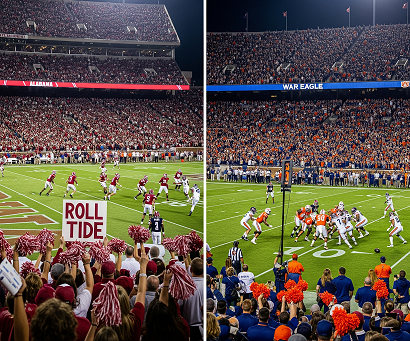
The joint announcement was made at the SEC Headquarters, with athletic directors Greg Byrne of Alabama and John Cohen of Auburn, alongside SEC Commissioner Greg Sankey, detailing the groundbreaking agreement.
“The Iron Bowl is the pinnacle of collegiate rivalry, and today, we are proud to announce a new chapter that will elevate it to even greater heights,” said Commissioner Sankey. “This innovative format honors the passion of these two great universities and their fans, creating an even more compelling narrative for our conference and the entire country.”
Under the new structure, one game will be held in late September or early October, with the second and final game maintaining its traditional place on Thanksgiving weekend. Both games will count as conference matchups.
To decide the ultimate bragging rights, a new “James E. Folsom Sr. & Pat Sullivan Iron Bowl Trophy” will be awarded to the team that wins the annual series. If the teams split the two games, the trophy winner will be determined by a point-differential tiebreaker.
“This is an opportunity to amplify what makes this rivalry so special,” said Alabama AD Greg Byrne.
“It guarantees that every team and every senior class will have the chance to face their greatest rival at home each year. It deepens the significance of the regular season and creates a new, thrilling tradition for our student-athletes and fans.”
The move is a seismic shift for a rivalry that has been defined by a single, winner-take-all showdown for generations. Logistical and scheduling challenges were significant, requiring a coordinated effort to adjust future conference schedules.
Auburn AD John Cohen emphasized the mutual benefits and the shared desire to innovate. “This wasn’t about one side wanting an advantage; it was about both institutions recognizing a unique opportunity to enhance the greatest rivalry in sports,” Cohen stated. “Two games a year means the intensity, the passion, and the conversation around the Iron Bowl will be a constant. It’s a bold move, and we believe it’s the right one for the future.”
The decision has ignited a firestorm of excitement and debate across the state and the nation. While traditionalists may question altering a century-old formula, the prospect of two Iron Bowls every year promises an unprecedented level of drama and intensity. The new format ensures that a season of championship hopes can both be born and broken on the anvil of this expanded, legendary feud.



Be the first to comment