
In the quiet hours between dusk and dawn, away from the thunder of applause and the relentless hum of touring life, Nick Cave found something wholly unexpected: love raw, unguarded, and profoundly human.
For decades, the enigmatic frontman of The Bad Seeds has been revered as a poet of darkness, chronicler of grief, and alchemist of anguish. His words have stitched together loss and longing, his voice carrying the weight of every scar he has ever turned into song. But what happens when the man who sings of sorrow suddenly finds solace not on stage, but across from someone who never asked about his fame, only his truth?
Nick had retreated to a remote artist’s residency in the Scottish Highlands late last year. He called it “a step into stillness” after what he described as “a season of emotional disrepair.” The loss of his sons, the weight of public expectation, and the persistent echo of his own mythology had left him drained. He wasn’t there to write. Not at first. “I was simply trying to breathe,” he would later write in The Red Hand Files.
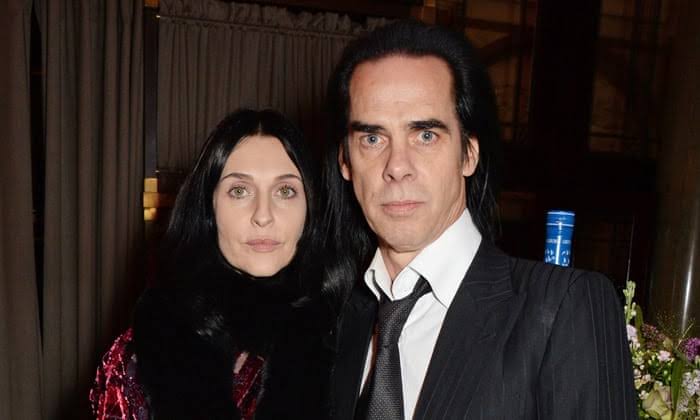
She was there for the same reason though not to escape a public life, but a private unraveling. Her name was Liora, a painter from Lisbon, unknown to most, unbothered by fame, and uninterested in the theater of celebrity. She had never listened to Murder Ballads, and when she asked Nick what he did, he simply said: “I write things that hurt a little.”
They met in the shared kitchen of the old stone house turned residency. He was making tea. She was cutting ginger. What followed was not a cinematic thunderbolt, but a slow, awkward unfolding days of long walks, shared silences, and stories told not as performances, but as offerings.
“She asked questions no one ever asked me,” Cave later reflected. “Not about my work, not about the persona but about my favorite tree, the smell I missed from childhood, whether I ever danced in the rain as a boy. It disarmed me.”
For a man who had always been in control of his narrative, this was terrifying. And freeing.
Their connection deepened over three quiet months. Liora painted in a sunlit studio. Nick, gently, began to write again not elegies or epics, but letters. Small, handwritten notes left beside her canvas, in the pocket of her coat, under her coffee cup. “You remind me,” one read, “that beauty doesn’t always scream. Sometimes it just sits beside you and listens.”
Word eventually got out that Cave was at the residency, and whispers reached the press. A drone was spotted near the property. He packed to leave.
The two moved quietly to a small flat in Edinburgh, where, according to close friends, Cave continued writing and Liora prepared for her first solo exhibition. There were no red carpets, no magazine covers. Only shared meals, foggy morning walks, and the slow rediscovery of joy.
“He laughs more now,” said Warren Ellis, Cave’s longtime friend and collaborator. “And not the ironic kind real laughter. It’s unnerving, to be honest.”
The public eventually caught glimpses a blurred photo of them at a secondhand bookshop, a fan’s snapped image at a café but neither made statements. As Cave said in a rare interview, “Some things are too sacred for the stage.”
Their love, like his music, is not without its shadows. Cave admits he still battles grief, that some mornings are harder than others. But now, he says, “There’s someone to hold the silence with me. And sometimes, that’s all we need.”
In an industry that devours intimacy and packages pain, Nick Cave has found, not a cure, but a companion. A reminder that even the loneliest voices can find harmony not in the spotlight, but in the quiet echo of another’s heart.
And perhaps, in the end, that is the most unexpected song of all.


Be the first to comment